


Veolia has extended its medical waste management capabilities to address key issues for the United Kingdom's healthcare sector and NHS, including carbon emissions generated by traditional clinical waste hierarchy positions.
New services will help organisations in making further progress towards their net-zero ambitions by optimising compliant handling, management and treatment of waste streams that fall under the orange, yellow, red, blue and purple clinical waste categories.
Designed to treat infectious, anatomical, sharps , medicines waste and cytotoxic and cytostatic waste the expanded service will complement the existing offensive waste capabilities and deliver 15,000 tonnes of clinical waste capacity per year to the market through a complete self delivered service from collection to disposal. Backing the service are new dedicated clinical waste transfer facilities that can segregate HTI and Non-HTI waste streams so that they can be processed through specially adapted and modified Energy Recovery Facilities, the company's existing clinical capacity, and High Temperature Incinerator site at Ellesmere Port.
By using the processes developed during the pandemic the service will improve traditional clinical waste hierarchy positions, and can lower the carbon emissions by around 70% (from 212.60kg/CO2e/tonne to 58.03kg/CO2e/tonne) compared to existing services .
It also enables the ERF to generate up to 600 kWh electricity per tonne, and allows ferrous metal to be recovered for recycling.
This moves all Alternative Technology (AT) waste up the hierarchy from a D9 disposal code solution, with an environmental impact score of 12 delivered through autoclaving, to a R1 recovery code with an environmental impact score of 6 for thermal treatment with energy recovery. Removing the need for pre-sterilisation through autoclave services, it avoids both the carbon produced from this energy intensive step, and eliminates the production of autoclave floc which requires further transport and additional carbon impact.
By using the clinical waste for electricity and heat generation, and putting energy back into the National Grid, the healthcare sector will be playing an active role in helping UK energy security.
Donald Macphail, Chief Operating Officer - Treatment at Veolia, says: "Our expanded service offering is truly innovative in this market and completely changes the way clinical waste has been managed for many years.
It demonstrates the commitment Veolia has made towards bringing new solutions that deliver waste hierarchy improvements and carbon reduction solutions to our customers.
"By using the clinical waste for electricity and heat generation, and putting energy back into the National Grid, the healthcare sector will be playing an active role in helping UK energy security, and dependency on fossil fuels ."
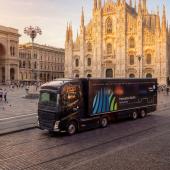
Veolia, which has managed clinical wastes since 1996, will self-deliver the logistics element of the expanded service using the fleet, ranging from small vans to double deck articulated vehicles, which conform to the standards required for the compliant collection of UN3291 Clinical Waste and Hazardous Waste material, together with appropriately trained drivers.