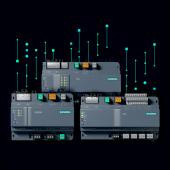


Schneider Electric Explores Benefits of Digitally Retrofitting Hospitals in New White Paper

Digital retrofits can reduce hospital energy consumption by up to 18 per cent, delivering one of the largest efficiency gains for healthcare facilities according to a new white paper from Schneider Electric produced in collaboration with JLL.
"Healing Healthcare Infrastructure: How Retrofits Impact Energy, Carbon and Cost" is believed to be the most extensive study ever to have looked at the energy utilisation, carbon emissions and financial performance of nine commercially available Energy and Carbon Conservation Measures (ECCMs).
The study focused on seven global hospital locations, each representing distinct climate zones and grid profiles. The same technology used to generate these insights can also help healthcare facility professionals assess their own buildings. Providing data-backed insights to prioritize upgrades, justify investments and even access funding.
Unlike conventional commercial buildings, downtime is not an option in hospitals that run critical, life-saving equipment, HVAC systems and digital infrastructure 24/7 - all of which are highly energy intensive and must perform without fail. At the same time, facility teams are under growing pressure to maintain peak performance, manage rising energy demand and prevent disruption to patient care. In this high-stakes environment, the modelling shows that digital retrofits deliver the fastest and most scalable gains, unlocking energy savings equivalent to 10,500 kWh per year, the equivalent of powering 4 average* homes for a year.
Key findings from the study include:
Hospitals rely on two critical systems - building and power. Within that context, the analysis identified that digital retrofits consistently outperform physical ones across the seven global regions in the report*. High impact building and power measures include:
- Building Management System (BMS) controls upgrade (ASHRAE Guideline 36)
- Occupancy-based zone controls
- Power factor and harmonic correction
- Power monitoring software
- Power SCADA
- Continuous commissioning