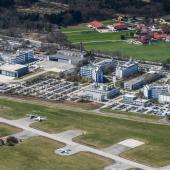



Mitie is trialling flowering lawns at two contracts in the Scottish town of Leuchars and Dudley, West Midlands.
A middle ground between traditional manicured lawns and wildflower meadows, the flowering lawns provide an attractive and environmentally beneficial solution to covering managed grassland.
During the trials, Mitie will measure the benefits the lawns have on local biodiversity, recording the types of plant species present and their respective quantities.
One of the main benefits of flowering lawns is their positive contribution to biodiversity.
Without pollinators, plant life cannot thrive, and the Friends of The Earth network of environmental organisations reports 35 species of bee to be facing extinction as a result of climate change and the use of pesticides in the UK. Flowering plants provide the necessary food needed for bees which, in turn, supports the creation of food and habitats for a range of other creatures like birds, bats and other critters, supporting a sustainable ecosystem.
Without pollinators, plant life cannot thrive, and the Friends of The Earth network of environmental organisations reports 35 species of bee to be facing extinction as a result of climate change and the use of pesticides in the UK.
Flowering plants provide the necessary food needed for bees which, in turn, supports the creation of food and habitats for a range of other creatures like birds, bats and other critters, supporting a sustainable ecosystem.
Flowering lawns also offer a more aesthetically pleasing look to wilder alternatives all year round.
This makes them a great option for corporate environments where customers often prefer the neat look of a traditional grass lawn compared to meadows, but still want to support biodiversity.
As part of our strategy to be the UK’s greenest commercial landscaping provider, we’re always looking to trial new innovations to keep us leading the industry.
While wildflower meadows look their best during summer months, adverse weather can lead to them being damaged, affecting their appearance.
This is not a problem however for flowering lawns, which are low growing and far more resilient to weather changes.
On top of this, they are easily maintained, as they can be cut regularly and flowers will re-grow quickly, meaning they look bright and tidy throughout the seasons.
As part of the trials, Mitie has planted 34 plant species across two lawns in Leuchars and Dudley, which have been cultivated using different techniques across three sections.
Over the next 12-36 months, Mitie will monitor the results, measuring which plant species are thriving or underachieving across the lawns, assessing the presence and quantity of plants like Yarrow and Corncockle.
Mitie will then be able to use the data generated from this trial to understand the most appropriate sowing techniques, and the most suitable species for different climates and soil conditions, which can be tailored to the location of its customers.
Tim Howell, Managing Director, Landscapes, Mitie, says: “As part of our strategy to be the UK’s greenest commercial landscaping provider, we’re always looking to trial new innovations to keep us leading the industry.
Our customers are showing increasing demand for solutions that support biodiversity on their sites, so we look forward to delving into the results of these trials to understand how flowering lawns can develop nature positive landscapes whilst maintaining a neat and attractive appearance.”