

CIFF Guangzhou 2026: Integrating Green, Intelligent and Collaborative Workspaces (28-31 March)

As expectations for healthier, lower-impact and more people-oriented environments continue to rise, office and commercial spaces are undergoing significant change.
Sustainability has moved beyond environmental compliance to become a core consideration linking operational efficiency, employee wellbeing and long-term social value.
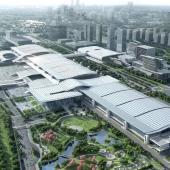
Within this context, the Office & Commercial Space exhibition at CIFF Guangzhou 2026 (Phase 2, 28-31 March, Canton Fair Complex) provides an industry platform for examining how workplace and public space design are responding to these shifts, with a focus on practical application, manufacturing capability and market demand.
Exhibition Framework
Under the theme CONNECTCREATE, CIFF Guangzhou prioritises implementation over concept. The exhibition demonstrates how sustainable strategies can be applied at scale across materials, products and spatial systems. It brings together three interrelated sectors - Office Environment, Office Seating and Public Commercial Space - to present a coordinated view of design, production and use.
Office Environment
Office environments are being reshaped by the expansion of hybrid working, increased attention to health and wellbeing, accelerated net-zero commitments and the growing role of workplaces in expressing organisational identity. In response, the Office Environment sector prioritises human-centred design, low-carbon development and digital integration, positioning the green office as a functional and achievable standard.
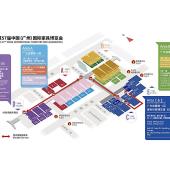
Located in Area A, this sector operates as a full supply-chain platform for trend presentation, product sourcing and manufacturing exchange. It presents a comprehensive range of office furniture and supporting products, with particular focus on two areas of sustained growth: healthcare and senior care, and smart office solutions.
The healthcare and senior care segment reflects demographic change and policy support for integrated medical and care services. Exhibits include intelligent nursing beds, age-appropriate furniture and coordinated healthcare environments. The smart office segment highlights the integration of ergonomics and digital technology through products such as height-adjustable desks, health-oriented seating and intelligent meeting systems, illustrating emerging approaches to workplace functionality. Participating brands include Sunon, TIANTAN, VICTORY, QUAMA, SAOSEN, Jongtay, HONGYE, Kinwai, LOCTEK and COFEMO.
Office Seating
Office seating continues to evolve from static posture support towards dynamic response to movement and use. Advances in adaptive mechanisms, structural design and environmentally responsible materials are influencing how seating supports comfort, mobility and long-term health.
The Office Seating sector, located in Area D, brings together international and domestic manufacturers with an emphasis on health performance, original design and sustainable production. Exhibits include adaptive seating systems, dynamic balance chairs and low-impact material solutions, demonstrating current developments in ergonomics, functional performance and environmental consideration. Brands represented include KOKUYO, Lamex, HENGLIN, GTchair, ENOVA, Merryfair, Benithem and Bestuhl.
Public Commercial Space
Public and commercial spaces face increasing complexity, driven by diverse functional requirements, integrated technologies, heightened expectations for safety and comfort, and the need for long-term operational resilience. As a result, space design is shifting towards flexible systems that balance user needs, efficiency and sustainability.
Located in Area B, the Public Commercial Space sector presents solutions for education, healthcare, hospitality, retail environments and transport infrastructure. Exhibits include modular rapid-installation systems, low-carbon materials, intelligent space management platforms and healthy environment control technologies, supporting efficiency, durability and user-focused outcomes. Participating brands include LEADCOM, Hongji, Huimei, EDUNESTCO, Senchuan and New Century.
Design, ESG and Industry Connection
In 2026, CIFF Charm Road 2.0 continues to develop as a key project integrating ESG principles across design, manufacturing and consumption. Its closed-loop approach - encompassing green design, low-carbon production and circular use - provides a structured framework for applying sustainability in practice.
The exhibition programme is further supported by themed platforms such as Linking Design Star, Design Art Culture and the Guangzhou Office Environment Theme Pavilion. These initiatives connect design, industry and culture, demonstrating how responsible design can contribute to commercial value and the development of future spatial models.
Across the exhibition, low-carbon principles are incorporated into booth construction, material selection and visitor experience, reinforcing sustainable practices throughout the event. CIFF also strengthens its role as an industry connector, linking designers, manufacturers, distributors, public institutions and international buyers through initiatives including the CIFF Interbiz Club, overseas promotion programmes and targeted business matching, supporting stable and internationally connected value chains.
At the intersection of industrial development and social responsibility, the Office & Commercial Space exhibition at CIFF Guangzhou 2026 presents a clear and structured view of how sustainability, technology and collaboration are shaping the future of work and public environments.
Register at https://www.ciff-gz.com/en to discover for yourself how sustainability is reshaping the future of work and public space.
57th CIFF Guangzhou 2026
phase 1 - 18-21 March 2026
home furniture, homedecor & hometextile, outdoor & leisure furniture
phase 2 - 28-31 March 2026
office furniture, commercial furniture, hotel furniture and furniture machinery & raw materials